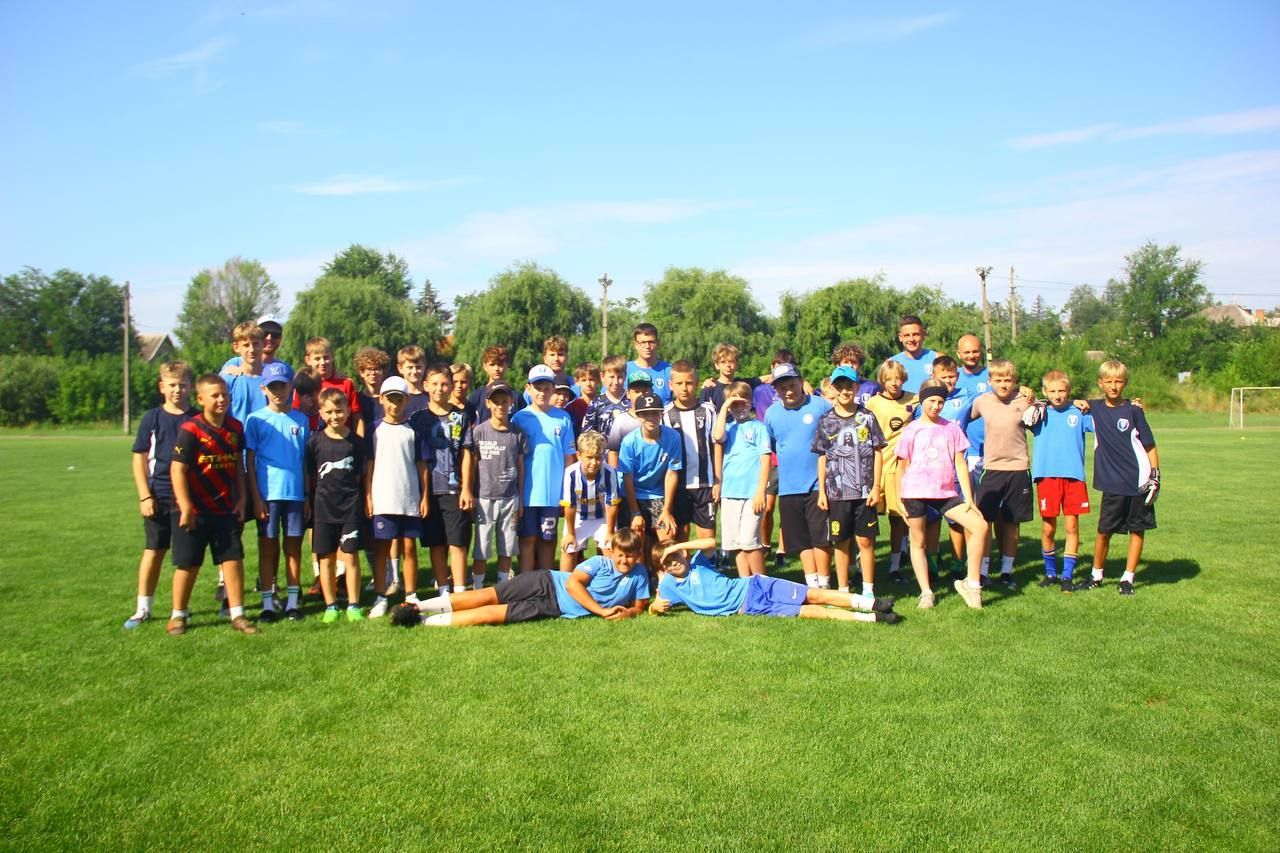
Sport as a Lifeline for Ukrainian Children

Pasha leads SportQuest’s work across Ukraine with a clear focus. He uses sport to serve children, connect families, and equip local leaders who continue the work within their own communities.


Pasha watches as kids run onto a worn field, some laughing, some unsure, all ready to play. In a country where daily life shifts with the sound of sirens, the camp creates a place for children and leaders to gather. For a few hours, they focus on something steady. They play, connect with friends, and experience a sense of normalcy.


How It Started

Pasha did not set out to lead this kind of work. As a young athlete, he attended a KidsGames outreach in his community. A coach invested in him, shared the Gospel, and remained consistent in his life. That relationship changed his direction.


“I became a Christian through this project,” Pasha says.


He pursued training in physical education and coaching, then stepped into ministry roles that allowed him to invest in others. In 2017, he joined SportQuest and committed to long-term work in Ukraine.


“SportQuest did not ask me to become something else,” he says. “They strengthened what God already started.”


That calling now plays out in a simple and repeatable way. Each camp begins with children gathering and leaders welcoming them into the day. A story connects sport to a biblical truth, and then the group moves into activity. Kids run drills, compete, and learn how to function as a team.


Local leaders carry the responsibility. Church volunteers, young leaders, and community partners lead each part of the camp. Pasha focuses on equipping those leaders so the work continues long after the camp ends.


On the final day, parents step onto the field and join their children. They play together, meet the leaders, and begin to build trust. What starts on the field begins to extend into the home and the local church.


When Everything Changed

In 2022, Pasha remained in his village as the war moved closer. During that time, a group of missionaries arrived ready to serve. They brought food, spent time with families, and gathered more than 500 people in one place.


That moment stayed with him. He saw how quickly children responded when someone created space for them. He launched a camp next to a damaged school in his village, even without ideal conditions.


From there, the work expanded. Fifty camps reached more than 1,500 children the following year. By 2024, camps had reached 12,467 children across 148 camps in 109 settlements, with 2,614 leaders serving across the work. The reach continued in 2025, as camps reached 13,027 kids. By 2025, leaders had also established 204 sports clubs, creating hundreds of ongoing points of connection within local communities.


Many of these communities lack fields, equipment, and consistent access to organized activity. Pasha and his team adapted by building a mobile model they call “camps on wheels.” Teams bring equipment, structure, and leadership into each location. They set up wherever children gather and create a consistent experience in places that often get overlooked.


“We go to them,” Pasha says. “We do not wait for them to come to us.”


What Happens After

The goal extends beyond the camp itself. Leaders build relationships with families, and parents connect with people they trust. Local churches continue the work by following up, hosting gatherings, and staying present in the community.


“We see families return,” Pasha says. “They come back because they know and trust the coaches and leaders at the camps.”


The camp becomes a starting point for ongoing engagement rather than a one-time event.

Pasha measures success by the leaders who step forward. New volunteers continue to join, even in difficult conditions. Teenagers learn from more experienced leaders and over time begin to take ownership themselves.


Pasha walks alongside them as they grow in leadership, teamwork, communication, and serving others.


The Daily Reality

Each camp requires between $1,000 and $2,000 to operate. Teams navigate staffing challenges, travel limitations, and security concerns. Air raid alerts and drone activity interrupt plans and require constant awareness. Checking for nearby activity mid-meeting or mid-conversation is simply part of daily life now. These realities shape every decision, but they do not stop the work.


What Comes Next

The structure is in place, and leaders continue to step forward. Communities respond, and churches stay engaged. Additional support would expand the reach and strengthen the depth of this work.


More funding allows Pasha to train leaders, launch additional camps, and serve more families in areas that currently remain unreached.


“More support gives us time to invest where it matters most,” Pasha says.


Be Part of It

This work continues because people choose to be part of it.


When you give, you help equip leaders who remain in their communities. You help create spaces where families connect and engage with local churches. You help extend this work to areas that need it now.


You can support this work through a donation to SportQuest at https://www.sportquest.org/donate.

SHARE THIS ARTICLE


August 12, 2026
The 2026 Panama Vision Trip Fifteen Betenbough team members, representing five families, traveled to Panama City for a week that brought them into classrooms, onto athletic fields, and alongside local churches and families. Led by SportQuest leaders Jacob Susud and Becky Bowden, the team served alongside local leaders Cesar and Irela Rodriguez and Kike and Zuleyka Catalan. These families have spent years investing in students, athletes, schools, and churches throughout Panama City. The Betenbough team joined that ongoing work. Much of the week placed team members directly with young people. They visited elementary schools and high schools, shared Bible lessons and personal testimonies, led games, and talked with students about faith. Some students stayed after the lessons to continue conversations and spend more time with the team. Sports provided another point of connection. Team members joined local volleyball and soccer programs, helped with practices, encouraged athletes, and shared their testimonies. They also partnered with a local church for a community festival, spending time with children and families through games, activities, and conversations about the Gospel. Parents and children served side by side throughout the week, sharing their faith and working together in a culture different from their own. One moment brought the experience within the team into clear focus. During the trip, a Betenbough team member publicly declared their faith through baptism. The team celebrated together as someone who had traveled to Panama to serve took a significant step in their own faith. Throughout the week, Cesar and Irela Rodriguez and Kike and Zuleyka Catalan connected the team with the people and ministries they serve throughout Panama City. When the Betenbough families returned home, these local leaders continued the work they had invited the team to join. Take the Next Step SportQuest Vision Trips connect organizations and families with trusted local Partners around the world. Teams join ministry already underway, serve alongside local leaders, and build relationships across cultures. To learn more about hosting or joining a SportQuest Vision Trip, contact Jacob Susud at jacob.susud@sportquest.org .
August 7, 2026
Inside the 2026 Guatemala Family Vision Trip The 2026 Guatemala Family Vision Trip brought families together to live and serve on mission as a family. From July 7 through 14, the team spent the week in and around Antigua alongside local SportQuest Partners Mynor and Rachel Mendez. Families served in local communities, built relationships across cultures, and practiced rhythms that strengthen family unity. Each experience gave them another opportunity to work together and consider how a shared mission can shape life back home. The purpose extended beyond serving for a week in Guatemala. The trip challenged each family to think intentionally about the kind of home they want to build and how they can live as a Kingdom Outpost together. Developing a Vision for Home Throughout the week, families explored the four pillars of a Kingdom Outpost family: Multigenerational Vision, Priesthood of the Family, Culture, and Adventure. Training, devotionals, and time in the Family Vision Workbook helped each family define its identity, vision, mission, and core values. These conversations asked them to identify what matters most and consider how those priorities shape everyday family life. The itinerary gave them opportunities to practice those ideas rather than simply talk about them. Daily responsibilities, shared meals, family time, service, and debriefs became part of the experience. Serving Side by Side In Parramos, the team led sports clinics for approximately 45 boys and girls, ages 12 to 14. The children from the Vision Trip did not watch from the sidelines. They joined the local students in sports, games, and activities while their families served together. In Barrio La Cruz, the work looked different. Team members worked together to build stoves for local families and spent time playing games and sports with children in the community. During another part of the day, women gathered for a cooking class and Bible study while children participated in sports and games. These experiences gave every member of the family a way to contribute. Parents and children could work together, serve together, and see firsthand how each person has a role in a shared mission. Practicing Family Rhythms Some of the most intentional parts of the week happened away from the service projects. Daily devotionals and debriefs gave the team time to process what they experienced. Families worked through their Family Vision Workbooks, shared meals, completed responsibilities together, and made space for conversations about their life at home. A Shabbat dinner on Saturday evening put one of those rhythms into practice. Each parent took a role in the meal as families experienced Sabbath together and considered what it means for parents to lead spiritually within their homes. The week also made room for adventure and cultural experiences. Families explored Antigua, attended church together in San Lucas, and hiked Pacaya Volcano. These shared experiences gave them time to learn, work together, and experience Guatemala beyond the projects where they served. Bringing It Home On the final full day, the team returned to Barrio La Cruz to serve before gathering for a trip debrief. That final conversation brought the week back to its original purpose. Families reflected on what they had experienced, discussed what they had learned, and revisited the vision they had been developing throughout the trip. The goal was not to leave the rhythms of the week in Guatemala. Family identity, vision, mission, core values, shared meals, Sabbath, service, and family meetings gave each family practical ways to continue building an intentional family culture at home. The trip gave them a week to practice being a family on mission together. Home is where that mission continues. Take the Next Step A SportQuest Family Vision Trip gives families an opportunity to serve within established, trusted partnerships while learning to live on mission together. Through service, training, adventure, and shared family rhythms, each member has a role as the family serves alongside local leaders and builds relationships across cultures. To learn more about hosting or joining an upcoming SportQuest Vision Trip, contact Jacob at jacob.susud@sportquest.org .
August 7, 2026
The 2026 Belgium Vision Trip Some of the most meaningful ministry begins with something as simple as showing up. That defined the 2026 SportQuest Vision Trip to Bilzen, Belgium. Nineteen team members from Betenbough Homes traveled alongside leaders Jacob and Laura Susud and Rance and Stacy Bland to serve with longtime SportQuest Partner Kevin Verstraeten and the local church in Bilzen. Much of the week centered on a neighborhood park, where sports and games created opportunities to meet children and families. Each afternoon, the team returned to the same park, built relationships, and invested in the community. Building Relationships Around 25 children came to the park on Monday. As the week continued, children invited friends, families returned, and attendance grew. By the final day, nearly 50 children participated in the sports camp, with many parents staying to watch and spend time with the team and members of the local church. Sports, games, and activities brought children together and opened the door for conversations about faith. After games and competitions, children gathered in small groups. Team members shared biblical truths, asked questions, and listened as the children talked about faith and what they were learning. As the week progressed, those conversations became more personal. Parents also spent time engaging with the team and members of the local church. Beyond the Park While afternoons centered on the sports camp, mornings took the team into other parts of the Bilzen community. They worked alongside members of the local church on projects in church members' homes and at a local school, meeting practical needs while spending time with the people who serve there year-round. Church families also opened their homes for meals and conversation. The team worshiped with the local church, explored Brussels and Bastogne, and learned more about the people and culture around them. The team had not come to Belgium to create a new ministry. Kevin and the local church already knew the community, had established relationships, and continued investing in local families long after the Vision Trip ended. The Betenbough team joined that work for the week. They led sports and games, shared their faith, prayed with others, completed service projects, and built relationships across cultural differences. Daily devotionals and debriefs helped them process those experiences together. The Betenbough team returned home, while Kevin and the local church continued investing in the relationships built throughout the week. Take the Next Step SportQuest Vision Trips connect teams with established local Partners and give them a practical way to support ministry already underway. Teams serve alongside local leaders, build relationships across cultures, and see how consistent, local ministry reaches people over time. To learn more about hosting or joining an upcoming SportQuest Vision Trip, contact Jacob at jacob.susud@sportquest.org .