Where Sport Brings Them Back in Ukraine

Pavlo, known as Pasha, leads SportQuest’s work across Ukraine with a clear focus. He uses sport to serve children, connect families, and equip local leaders who continue the work within their own communities.


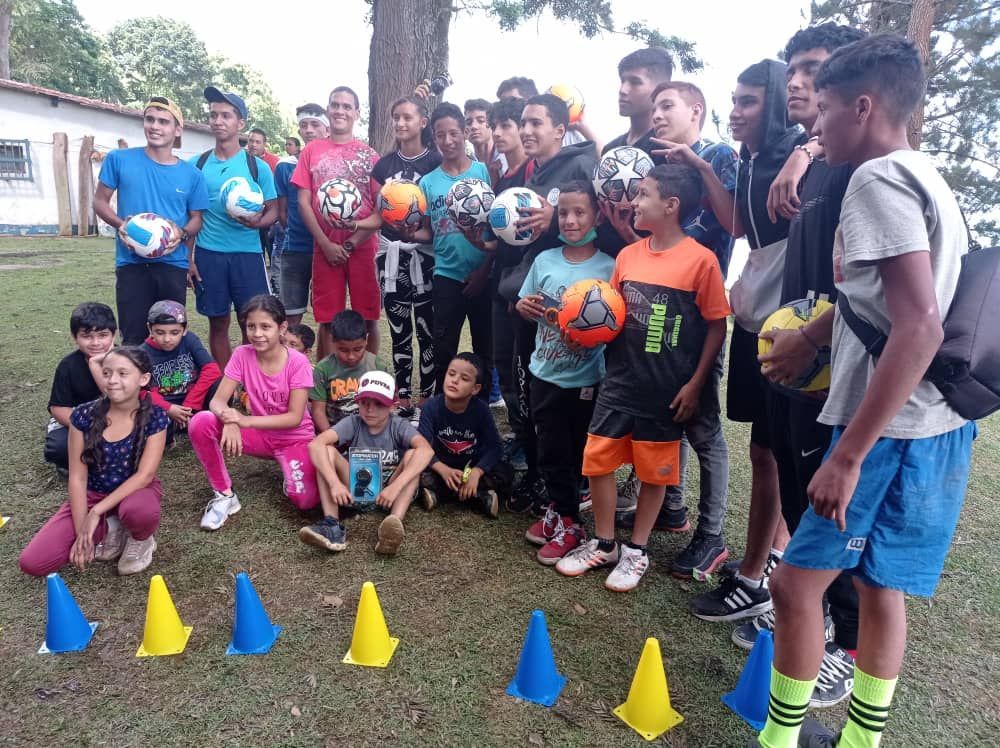
Pavlo watches as kids run onto a worn field, some laughing, some unsure, all ready to play. In a country where daily life shifts with the sound of sirens, this space matters. For a few hours, they focus on something steady. They play, connect with friends, and experience a sense of normalcy.


How It Started

Pavlo did not set out to lead this kind of work. As a young athlete, he joined a KidsGames outreach through the International Sports Coalition. A coach invested in him, shared the Gospel, and remained consistent in his life. That relationship changed his direction.


“I became a Christian through this project,” Pavlo says.


He pursued training in physical education and coaching, then stepped into ministry roles that allowed him to invest in others. In 2017, he joined SportQuest and committed to long-term work in Ukraine.


“SportQuest did not ask me to become something else,” he says. “They strengthened what God already started.”


That calling now plays out in a simple and repeatable way. Each camp begins with children gathering and leaders welcoming them into the day. A story connects sport to a biblical truth, and then the group moves into activity. Kids run drills, compete, and learn how to function as a team.


Local leaders carry the responsibility. Church volunteers, young leaders, and community partners lead each part of the camp. Pavlo focuses on equipping those leaders so the work continues long after the camp ends.


On the final day, parents step onto the field and join their children. They play together, meet the leaders, and begin to build trust. What starts on the field begins to extend into the home and the local church.


When Everything Changed

In 2022, Pavlo remained in his village as the war moved closer. During that time, a group of missionaries arrived with a simple presence. They brought food, spent time with families, and gathered more than 500 people in one place.


That moment stayed with him. He saw how quickly children responded when someone created space for them. He launched a camp next to a damaged school in his village, even without ideal conditions.


From there, the work expanded. Fifty camps reached more than 1,500 children the following year. By 2024, the number grew to 132 camps, with hundreds more supported through partnerships.


Many of these communities lack fields, equipment, and consistent access to organized activity. Pavlo and his team adapted by building a mobile model they call “camps on wheels.” Teams bring equipment, structure, and leadership into each location. They set up wherever children gather and create a consistent experience in places that often get overlooked.


“We go to them,” Pavlo says. “We do not wait for them to come to us.”


What Happens After

The goal extends beyond the camp itself. Leaders build relationships with families, and parents connect with people they trust. Local churches continue the work by following up, hosting gatherings, and staying present in the community.


“We see families return,” Pavlo says. “They come back because they know who is there.”


The camp becomes a starting point for ongoing engagement rather than a one-time event.

Pavlo measures success by the leaders who step forward. New volunteers continue to join, even in difficult conditions. Teenagers serve alongside experienced teams and begin to take ownership of the work.


He invests in their development, training them to lead teams, communicate clearly, and serve their communities with consistency.


“More leaders means more families reached,” he says.


What They Carry

Each camp requires between $1,000 and $2,000 to operate. Teams navigate staffing challenges, travel limitations, and security concerns. Air raid alerts and drone activity interrupt plans and require constant awareness.


Even during our conversation, Pavlo paused to check for activity nearby. These realities shape daily decisions, but they do not stop the work.


“We focus on what we can do today,” he says.


What Comes Next

The structure is in place, and leaders continue to step forward. Communities respond, and churches stay engaged. Additional support would expand the reach and strengthen the depth of this work.


More funding allows Pavlo to train leaders, launch additional camps, and serve more families in areas that currently remain unreached.


“More support gives us time to invest where it matters most,” Pavlo says.


Be Part of It

This work continues because people choose to be part of it.


When you give, you help equip leaders who remain in their communities. You help create spaces where families connect and engage with local churches. You help extend this work to areas that need it now.


You can support this work through a donation to SportQuest at

https://www.sportquest.org/donate.


SHARE THIS ARTICLE

May 4, 2026
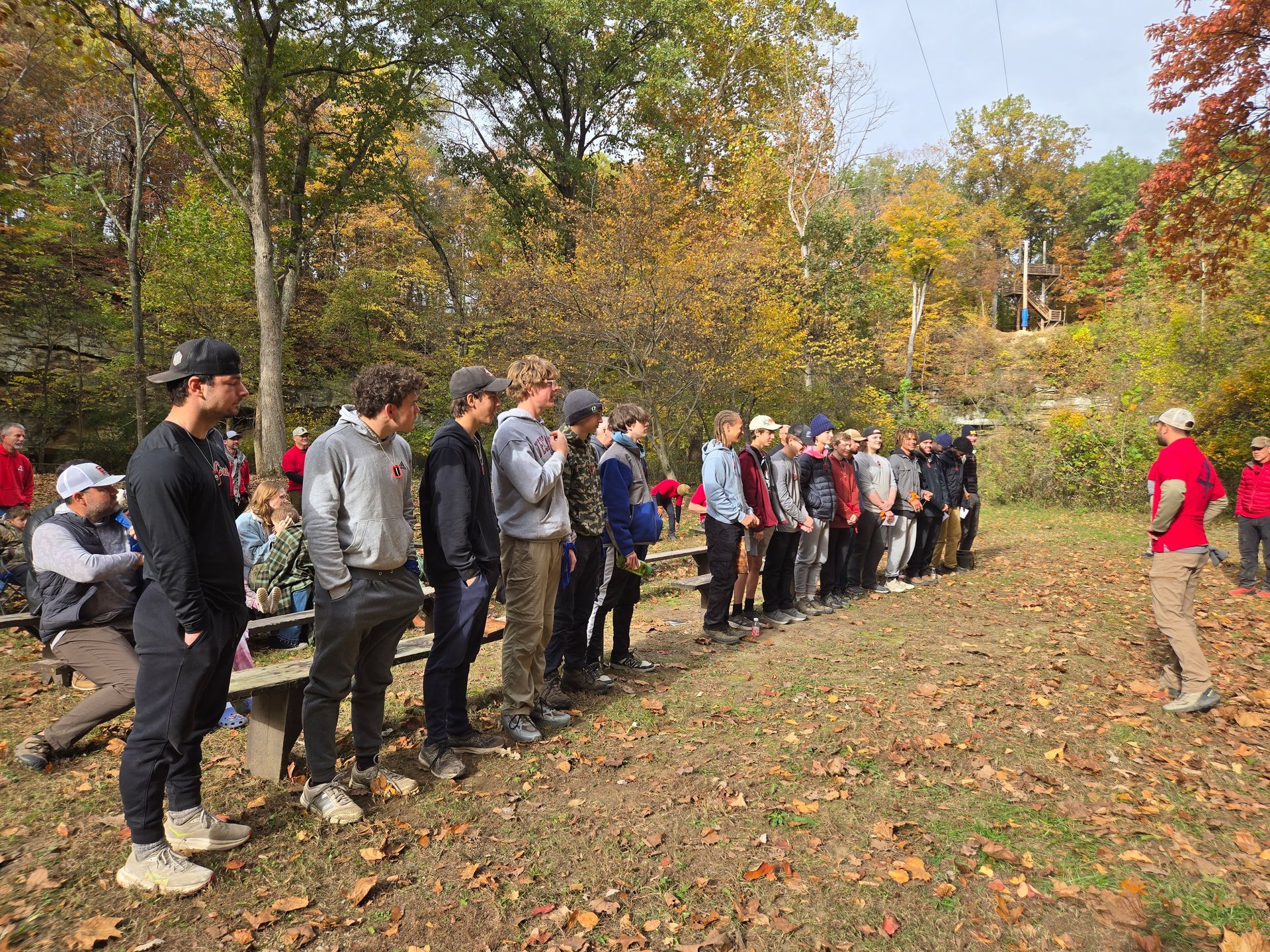
Chuck had led a small men’s group from his home for years. Like most groups, attendance shifted with the seasons. Some weeks ten men gathered. Other weeks only a few showed up to open Scripture, talk honestly about life, and pray together. One summer evening, something unexpected happened. A new name appeared on the group signup list. Chuck assumed an older man wanted to join. Instead, when the doorbell rang, an eighteen year old stood on the porch. He walked into a room of men mostly in their thirties through sixties and immediately joined the conversation. He spoke openly about his faith, served in children’s ministry, and attended church consistently. Before the night ended, he asked a simple question. Could he invite some friends? The following week, he returned with two more high school seniors. Over the next several months, those young men became part of the group. They showed up ready to engage, read Scripture daily, invited others to church, and demonstrated a depth of faith that stood out. “These guys inspired us as much as we encouraged them,” Chuck said. “They pursued Jesus in a way that made all of us want to grow.” As the relationships deepened, something else became clear. These young men did not simply attend. They pursued wisdom. They wanted to spend time with older men who had faced real challenges and could speak honestly about faith, failure, and growth. That pursuit stirred something in the group. During a Sunday service, Chuck sensed a clear prompting. One of these young men should attend the Youth Leadership Initiative, a wilderness leadership experience that challenges young leaders and helps them understand what it means to lead with purpose. At first, he considered sending one. That conviction did not settle. Why send one when four were ready? Chuck shared the idea with the men in his group. He hesitated to ask for financial support, knowing some carried real financial strain. Within an hour, every man committed to give. By the end of the week, they raised more than enough to send all four. “One of the men had just gone through bankruptcy,” Chuck said. “And he still gave. Every man stepped forward because they believed in investing in these young men.” They kept the plan quiet. At the next gathering, they asked the students to come because they had something to share. When the moment came, the group told them the cost was already covered. All four could attend. One of the young men struggled to accept it. The next day, he told Chuck he did not feel worthy. He believed someone else deserved the opportunity more. Chuck reminded him that leadership in God’s Kingdom does not depend on background or status. God forms leaders where He places them. After that conversation, he agreed to go.
April 14, 2026
A Kingdom Outpost Pillar Steven Covey once wrote: “Good families—even great families—are off track 90 percent of the time! The key comes down to a sense of destination. They know what the ‘track’ looks like. And they keep coming back to it time and time again.” That quote has stayed with us at All4One because it reframes the goal entirely. What sets good families apart? Direction. They know where they’re headed. They recognize the track when they see it again. And when they drift, they return. That idea changes the goal entirely. The goal is not perfection. But to build a clear vision, one strong enough to guide you back when life pulls you off track. And then anchor that vision in something that lasts, something that carries beyond a single generation. That’s Multigenerational Vision. Multigenerational Vision forms the first and most foundational pillar of a Kingdom Outpost family and may be the most countercultural idea we teac h. The Problem: We Have Been Thinking Too Small Most of the messaging aimed at Christian parents today is focused on an 18-year horizon. Raise good kids. Keep them in church. Launch them well. Then, presumably, begin the chapter of life that was really for you all along. This is not a biblical vision for the family. It is, at best, a cultural one with a Christian veneer. The hyper-individualism of our era has quietly reshaped how we think about parenting’s purpose. Children are increasingly seen as autonomous individuals whose job is to find themselves, and parents’ job is to facilitate that self-discovery without imposing too much vision or direction. Every major Disney film of the last two decades reinforces this. The heroic arc almost always involves rejecting parental expectation to forge your own path. The result creates families that reset with every generation. Children who inherit no vision, no identity, and no story larger than themselves, and then spend their twenties and thirties wandering aimlessly or trying to construct a vision from scratch. This represents a relatively recent experiment in human history, and the results point in the wrong direction. We are seeing historic lows in marriage rates and birthrates, unprecedented levels of loneliness among young adults, and a generation searching desperately for meaning in all the wrong places. God’s design for the family was never meant to reset every eighteen years. The Blueprint: Abraham’s Story In Genesis 18:19, God reveals why He chose Abraham: “For I have chosen him, that he will command his children and his household after him, and they shall keep the way of the Lord, to do justice and judgment.” Notice what God is not saying. He is not saying Abraham was chosen because he was perfect. Abraham was not. He lied to Pharaoh about his wife, doubted God’s promise, and tried to resolve the situation himself through Hagar. His failures are well documented and deeply human. He was chosen because God knew Abraham would lead his household in faithfulness across generations. The mission was not just for Abraham. It was for his children, and for his children’s children. God’s covenantal thinking always operates across generations. His promises in Deuteronomy 7:9 extend to a thousand generations. His charge in Deuteronomy 6 is to teach the next generation in every ordinary moment of life, when you sit, walk, lie down, and rise. Psalm 78 calls parents to pass down the story of God’s faithfulness so that the generation yet to be born will know it. The biblical vision for family does not end when our kids turn 18. This is only the beginning. Three Critical Mindset Shifts Building a multigenerational vision requires thinking differently in some fundamental ways. Here are three shifts that change everything. 1. From 18-Year Thinking to Legacy Thinking The first shift lays the foundation. Stop measuring success by how quickly your children become independent. Start measuring it by the kind of adults they become, and the kind of families they build. Multigenerational families see age 18 as a starting line, not a finish line. They stay relationally and practically invested in their children’s twenties, recognizing that decade stands as one of the most formative and vulnerable of a person’s life. They think about what it means to stay connected across distance and life stage, not just during the years everyone lives under the same roof. The question shifts from “Am I raising a good kid?” to “Am I raising someone who can build a healthy family of their own? And would I want the child I am raising to raise my grandchildren?” 2. From Inheritance to Heritage A critical difference between what you leave for your children and what you leave in them. Inheritance is what you leave for them, assets, money, and property. Heritage is what you leave in them, values, faith, character, and family identity. Both matter. But inheritance without heritage breaks down quickly. Studies show that seventy percent of wealthy families lose their wealth by the second generation, and ninety percent by the third. The Vanderbilt family is a frequently cited example. A fortune built across generations was gone within a few generations, not primarily because of bad financial management, but because the wealth was transferred without the wisdom, character, and identity needed to steward it. A strong heritage prepares the next generation to handle whatever inheritance they receive, and to pass both forward to those who come after them. 3. From Cultural Defaults to Intentional Traditions Multigenerational families do not simply inherit culture’s way of doing things. They ask why they do what they do, and they are willing to do things differently if those practices do not serve their family’s vision. This shows up clearly around the table. Throughout Scripture, the table is where blessing, identity, and belonging are passed down. One of the most practical tools we recommend for families pursuing multigenerational vision is what we call Three Generations, One Table, Every Week. This practice gathers parents, children, and grandparents together with no agenda other than presence, story, and connection. It does not operate efficiently and does not always feel comfortable. But it creates transformation because it creates the sacred space where a family’s story gets told and remembered. We recognize that not every family arrives at this table from the same place. Some of you represent Isaac generations . You inherited a living faith, and your calling is to steward and build on what was handed to you. Others represent Abraham generations . You are the first in your family to break from a legacy of brokenness, dysfunction, or generational idolatry. When God called Abraham, He did not ask him to honor his father Terah’s vision. Terah was an idol worshiper who never reached the Promised Land. God called Abraham to leave and pioneer something entirely new. If that reflects your story, do not be discouraged when three generations feels out of reach. Start with two, you and your children, and commit to the long game. Build faithfully so that your children will one day have the table you never had. Making It Practical: Where to Start A multigenerational vision does not require a 40-page document or a professional retreat. It starts with a few honest questions and the willingness to write down some answers. Picture the future. Imagine yourself at 80, surrounded by your children and grandchildren. What do you hope they carry? What legacy of faith and character do you want to pass on? What does faithfulness look like in your family’s story? Then bring it closer. Look ten years ahead. What does your marriage look like? What kind of people do you hope your children become? What does your family stand for in your community? Put it into words. Draft a simple family vision statement. Keep it to two or three sentences. Define who you aim to become and what you intend to build. Focus on honesty and direction, not perfection. Build a rhythm around it. Revisit it every year as a family. Celebrate what takes root. Adjust what needs attention. Invite your children to shape it as they grow. Give them ownership of a vision they will carry forward. A Final Word Psalm 128 paints a picture of what God calls blessed. Not wealth, not fame, and not an impressive career, but a family gathered around a table, across generations, with faith at the center. That picture remains within reach for every family willing to pursue it. It does not require perfect people. It requires purposeful ones. No family is perfect. It is never too late to start. The vision you build today, however imperfect, will become the foundation someone else stands on tomorrow. That makes it worth building.
April 14, 2026
Inside the 2026 Chile Vision Trip The 2026 SportQuest Vision Trip to Santiago, Chile brought together a team with a clear purpose. Nine team members from Betenbough Homes in Texas joined SportQuest leaders, Kent and Dona Wright, alongside Mynor and Rachel Mendez. Together, they stepped into a week focused on serving, learning, and supporting the work trusted local partners lead. From the first day, the team did not operate as a separate group. They integrated into the rhythm of ministry already active in Santiago. Serving Alongside Faithful Local Leadership In Santiago, José and Gislaine Eyzaguirre lead steady, relational ministry through both the local church and the school community. José pastors Iglesia Bautista Recoleta and serves as chaplain at Colegio Echaurren, a K–12 school where he engages students daily. Many of these students come from broken family environments and face realities shaped by trauma, abuse, poverty, and normalized violence. Their openness, engagement, and willingness to connect with the team carried significant weight. What developed throughout the week reflected more than participation. It showed trust forming in a place where people do not give trust easily. The team entered that work ready to support it. Each morning, they stepped onto the school grounds and coached students through sports like American football, volleyball, and ultimate frisbee. These activities went beyond instruction. They created a setting where trust formed quickly. Students engaged, asked questions, and opened conversations about faith and purpose. Connection, not performance, defined what stood out. Students who began the week hesitant grew more confident. Relationships formed across language barriers. Team members met students where they were, often at eye level, building trust through consistency and care. These moments created space for meaningful conversations that carried beyond the field. Work That Reflects Care for the Community Each afternoon, the team moved to Iglesia Bautista Recoleta. There, they worked alongside church members to restore and care for the physical space. They painted walls, repaired areas of the property, restored garden space, and improved the environment where the church gathers each week. The team brought effort, coordination, and shared ownership to the work. It also created natural opportunities for connection between the team and the local church. As the week progressed, the visible change in the space reflected the team’s investment. More importantly, it strengthened relationships that will carry forward long after the trip. A Clear Reminder of What Matters Throughout the week, one theme became clear. Winning looks different in Kingdom work. The team saw this in the way students responded, in the consistency of local leadership, and in the quiet moments where faith became personal. The team planted seeds. Conversations carried weight. Both the team and the community grew through the partnership. One student’s simple statement captured it well: “God protects.” That truth captured what the team experienced throughout the week. God worked through presence, consistency, and care. Growth Within the Team This experience shaped the team as much as the community they served. Team members stepped into leadership in real time. They led drills, shared their faith, and engaged in conversations that required clarity and humility. They navigated language barriers and learned to communicate through actions as much as words. The week of serving led to meaningful growth. One team member shared that she believes God placed her on the Vision Trip with purpose. During a devotional at the church, she stepped forward and shared her testimony publicly for the first time. As a wife, mother, and grandmother, she spoke honestly about her story of pain and disappointment. The relationships she built with the team and the openness she saw in the students gave her the courage to speak. She shared that her story continues, and that she will return home to invest in young women in her community who need strong, steady examples of faith. Many returned home with greater confidence in how God can use them in everyday settings. They also gained a deeper understanding of what faithful, long-term ministry requires. More Than a Week From the outside, a Vision Trip may appear short-term from the outside. On the ground, it tells a different story. This week in Santiago revealed the strength of long-term partnership. José and Gislaine continue this work every day. The local church continues to serve its community. The students who engaged this week will carry those conversations forward. The team’s role was to step into that ongoing work, strengthen it, and return home with a clearer understanding of how God is moving. Moving Forward This trip strengthened more than a single community. It equipped leaders. It deepened conviction. It reinforced the value of consistent, relational ministry. As SportQuest continues to build partnerships in places like Chile, the focus remains clear. Invest in people. Strengthen local leadership. Create environments where faith becomes real and active. This is how Kingdom impact multiplies. Through faithful, ongoing work that multiplies over time. Take the Next Step Organizations do not need to build something from scratch to engage in meaningful global impact. SportQuest Vision Trips create a clear pathway for teams to step into established, trusted partnerships like the work in Santiago. Your team can serve alongside local leaders, invest in real relationships, and return home with a deeper understanding of how faith becomes active in everyday life. If your organization is exploring how to engage your people in hands-on mission, we invite you to start the conversation. Learn more about hosting or joining a SportQuest Vision Trip contact Jacob at jacob.susud@sportquest.org .